

Section 02
22. The Evolution of Software Synthesis
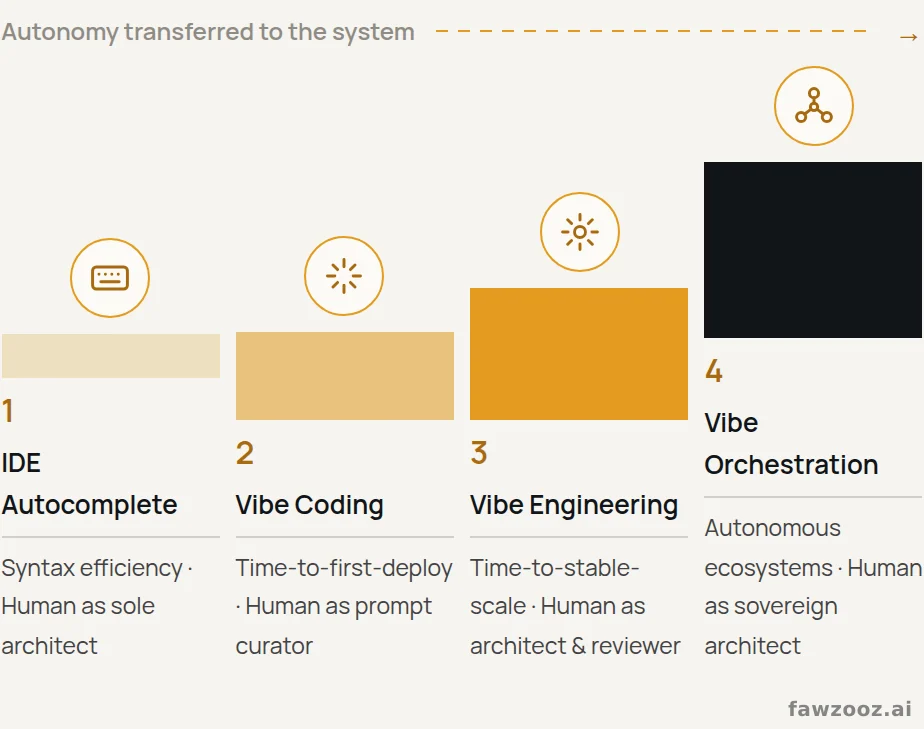
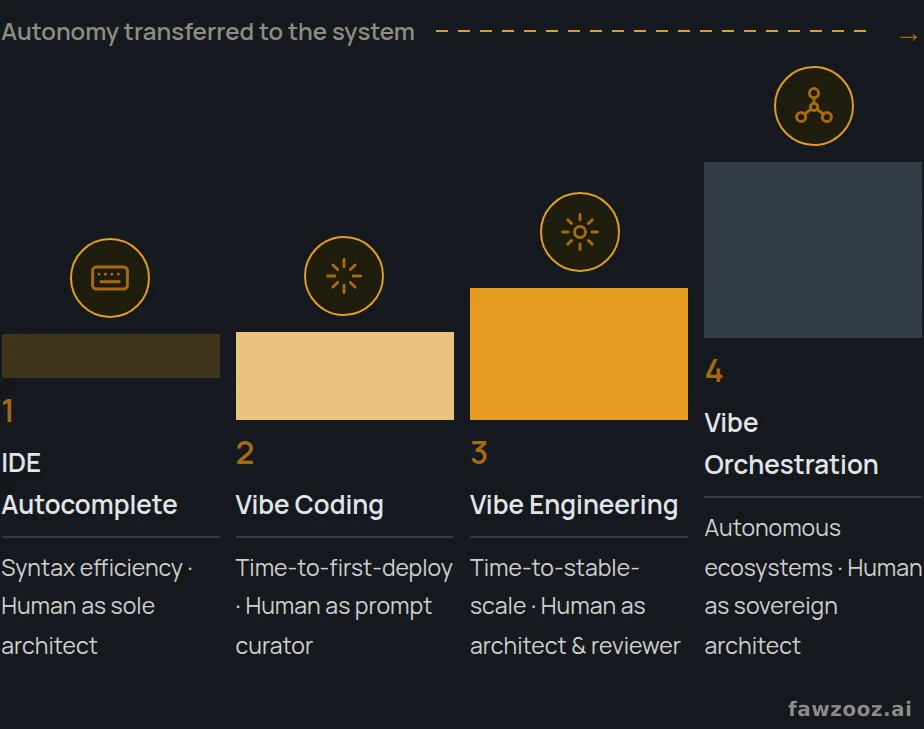
The last decade can be read through the changing relationship between developer and machine: from writing strict syntax to guiding autonomous agents. This is not merely a change of tools but a re-engineering of the human–computer interface and of the cognitive pathways of system construction. Three epochs define the trajectory.
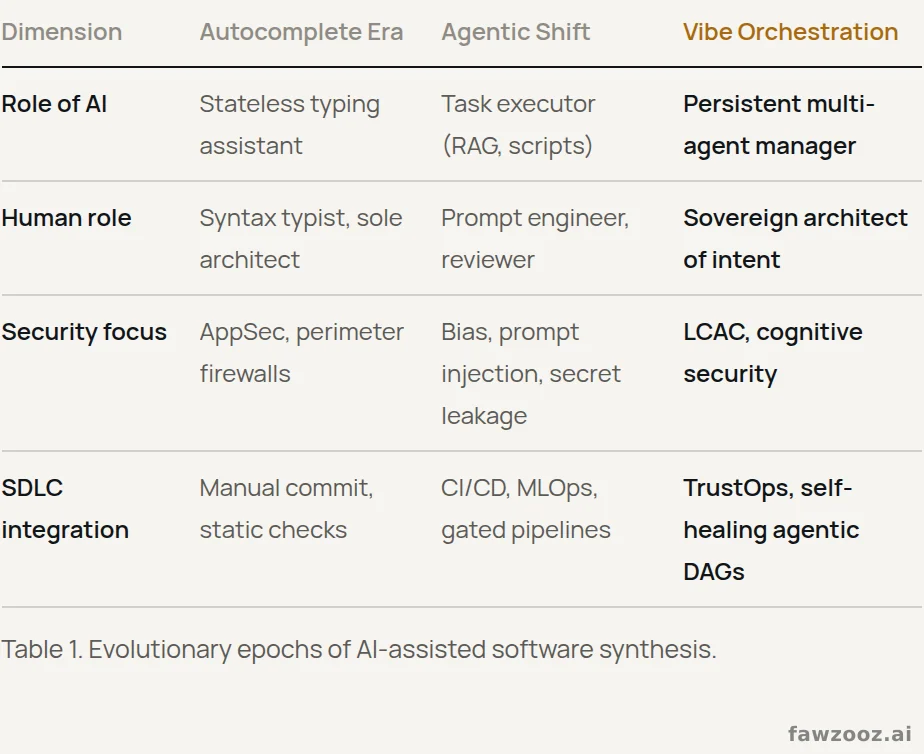
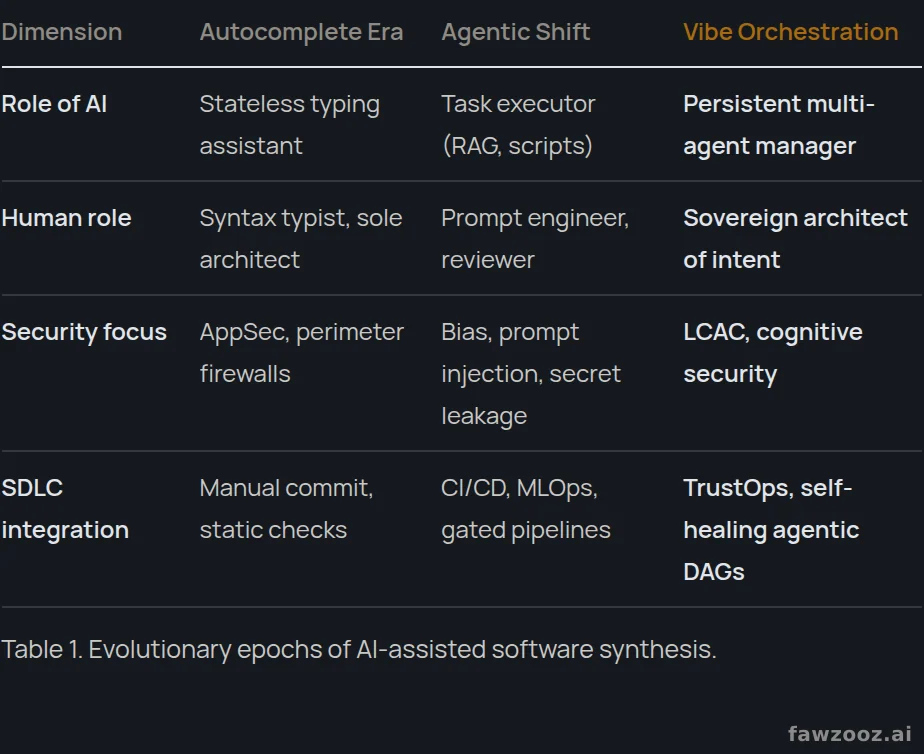
- The Autocomplete Era: AI as a transactional, stateless typing assistant inside the IDE. The goal was syntax efficiency — predicting the next line or completing boilerplate — while the human remained the active typist and sole architect of business logic.
- The Agentic Shift: AI acts rather than suggests. Using retrieval-augmented generation (RAG), it coordinates file creation, runs tests and calls APIs to execute multi-step workflows; the human becomes supervisor and reviewer.
- Vibe Orchestration: Systems operate continuously, mapping human intent to capabilities, assembling outcomes from curated service catalogs and directing subagents to build, deploy and monitor autonomously. AI is no longer a tool but a persistent participant.
Text in this figure
Autonomy transferred to the system · → · 1 · IDE Autocomplete · Syntax efficiency · Human as sole architect · 2 · Vibe Coding · Time-to-first-deploy · Human as prompt curator · 3 · Vibe Engineering · Time-to-stable-scale · Human as architect & reviewer · 4 · Vibe Orchestration · Autonomous ecosystems · Human as sovereign architect · Figure 3. The maturity path from autocomplete to orchestration. Each step transfers autonomy from the human to the system — and moves the security boundary with it.
Text in this figure
Dimension · Autocomplete Era · Agentic Shift · Vibe Orchestration · Role of AI · Stateless typing assistant · Task executor (RAG, scripts) · Persistent multi-agent manager · Human role · Syntax typist, sole architect · Prompt engineer, reviewer · Sovereign architect of intent · Security focus · AppSec, perimeter firewalls · Bias, prompt injection, secret leakage · LCAC, cognitive security · SDLC integration · Manual commit, static checks · CI/CD, MLOps, gated pipelines · TrustOps, self-healing agentic DAGs · Table 1. Evolutionary epochs of AI-assisted software synthesis.
Tip: use ← → to move between sections.